

[Campus] Responding to Students Voices: 2026-2 Global Campus Student Communication Meeting

On September 8, a student communication meeting was held at the Peace Hall of the Central Library on KHU Global Campus
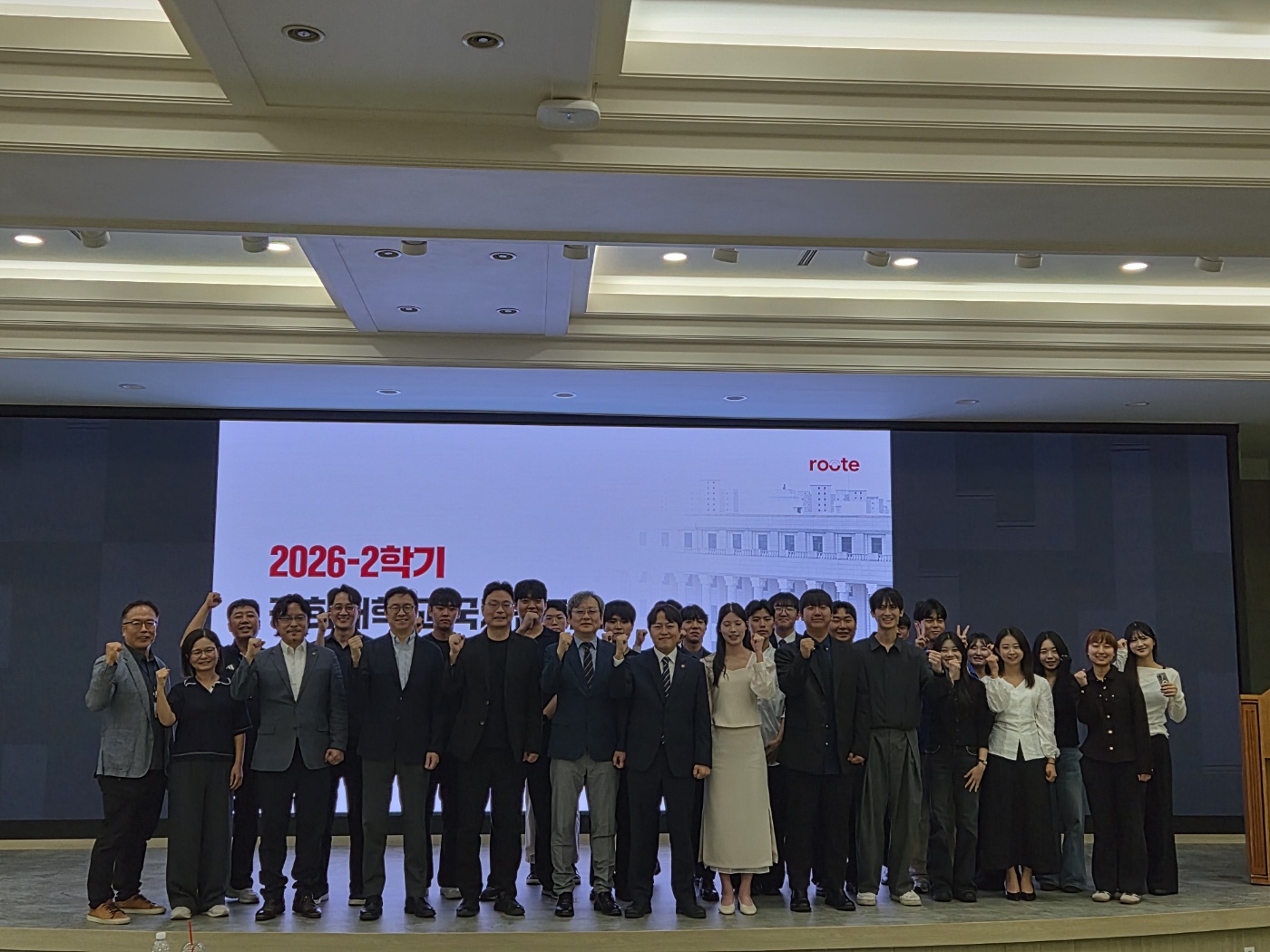
On September 8, a student communication meeting was held at the Peace Hall of the Central Library on the Kyung Hee University (KHU) Global Campus, bringing together the University administration and the student body to explore the future direction of the University. Attended by key university officials, including Vice President Lee Eun-yeol, as well as representatives from the General Student Association, the General Student Club Association, and the student associations of each college, the meeting served as a meaningful platform to officially convey the demands of the student society and foster continuous dialogue. During the meeting, participants addressed several major and chronic issues on campus, including the student growth platform and AI, space shortages and facility improvements, curriculum concerns, and matters specific to individual colleges.
A Blueprint for Future Academic Support: Student Growth Platform and AI
As the first agenda item, the DX Promotion Group shared the development status of the "Student Growth Platform," which embodies the University's edutech vision. The University announced plans to integrate students' curricular and extracurricular data to support one-on-one career planning tailored to various needs, such as employment, startups, and self-realization.
Furthermore, to create a future-oriented learning environment, the University doubled the credits for ChatKHU, which allows free access to paid AI models. It also announced plans to operate the AiKHU educational program available to all members and to implement the academic guide chatbot AsKHU early, urging students to actively utilize these resources.
Consensus on Campus Space Reorganization and Facility Improvements
The chronic issue of space shortage was also discussed in depth. Three colleges—the College of Software, the College of Electronics and Information, and the College of Applied Sciences—raised concerns about severe space shortages and requested updates on the construction of the "Future Science Building," considered a fundamental solution. In response, the Space21 Project Group stated that they are planning the construction of the approximately 29,752m2 Future Science Building. They plan to designate it as a hub for STEM convergence research and industry-academia cooperation rather than for specific departments, aiming to resolve the lack of research space compared to other universities.

Student representatives from each college ask questions about the specific needs of their respective colleges and listen to the administration's responses.
Beyond the space shortages at those three colleges, plans to improve other areas with chronic issues were also discussed. A major space relocation vision was also presented for the aging Student Center, completely transforming it from its existing closed structure into an open and shared space that can accommodate college-specific clubs. Additionally, regarding campus-wide safety issues, such as building leaks in the College of Foreign Language and Literature and the College of Electronics and Information, as well as falling risks in the stairwells of the College of Engineering, both sides agreed to establish university-wide repair priorities and make phased improvements.
Ensuring the Right to Learn and Customized Welfare: Detailed Diagnoses by College
Customized communication regarding the educational curriculum and welfare faced by each college was also actively discussed. Regarding the College of Engineering's demand to recognize credits for similar courses from other majors, the University stated that unconditional recognition is difficult due to varying difficulty levels across departments. However, it promised to consider reflecting this in next year's curriculum for foundational major courses after further discussion.
Moreover, the courses in the College of Foreign Languages and Literature were also on the agenda. The college requested to substitute major language conversation courses for required English lectures. However, the Office of Academic Affairs maintained that granting unprecedented exceptions is impossible, as the institutional uniformity of the entire university must be preserved. Instead, they added that they would encourage the establishment of linguistics lectures in English within the college to ease the students' course load.
Besides these, various pending issues were brought to the table. This includes solutions for double parking at the College of Physical Education, expansion of public spaces and amenities at the College of Life Sciences, explanations for the tuition standards at the College of Applied Sciences, and analysis of transfer causes and English adaptation support at the College of International Studies. Specific status checks and follow-up measures by each department were promised.

For the numerous discussions and promises, the continuous attention and active participation of all university members must be sustained
This student communication meeting holds great significance as it was a process in which the University and the students unreservedly shared the realistic limitations they face from their respective positions, seeking feasible common ground based on mutual understanding. For the numerous discussions and promises exchanged in the meeting room—ranging from the grand vision of space relocation to detailed curriculum reform plans—to not just remain on paper but lead to actual positive changes on the campus, the continuous attention and active participation of all university members must be sustained.
There are no registered comments.
- 1
- 2
- 3
- 4


I agree to the collection of personal information. [view]