

[Culture] Cheongnyeongpo: Where History Remains Isolated

Cheongnyeongpo on May 1, 2026
“Demote the former king to Prince Nosan and send him out of the palace into exile in Yeongwol. Provide him with proper support so that he may preserve his life to the end and calm the hearts of the people.”
Not long after, the record offers a second line.
“Prince Nosan has died.”
These sentences appear in The Veritable Records of King Sejo, yet the gap between these lines feels far greater than the time elapsed.
King Danjong, who lost his throne as a child, died in exile at the age of 16. The place that still holds his sorrow and grief is Cheongnyeongpo Meandering Stream, Yeongwol (County), Gangwon State. At first glance, Cheongnyeongpo appears to be a beautiful riverside forest, but behind its scenery lies one of the greatest tragedies of the Joseon Dynasty.
Cheongnyeongpo, a Place of Exile and Isolation
Cheongnyeongpo is a place meant to isolate. Surrounded by a river on three sides and blocked by cliffs at the back, it is completely cut off from the outside world. Because of these geographical features, the site functioned like a natural prison. It was not only a place of exile, but also a political tool used to isolate Danjong entirely from power. Danjong stayed there during part of his exile before moving to Gwanpungheon to avoid seasonal flooding.
Danjong, who died in exile at a young age, is remembered as the only king of Joseon who was not given a royal funeral. He remains one of the most tragic kings in Korean history. Even today, the site still carries the sorrow and sympathy that people once felt for him. To honor Danjong and his loyal followers, Yeongwol continues to host the “King Danjong Cultural Festival” annually.
Where History Meets Nature
Cheongnyeongpo is surrounded by water on its east, north, and west sides. The river flowing around the area forms an S-shaped incised meander. Because of these geological features, the site presents a fascinating natural scenery while also being an important example of the uplift and erosion process of the Korean Peninsula.
The area is home to many historical traces connected to Danjong, including Gwaneumsong Pine Tree, a natural monument designated as Natural Monument No. 349, old pine forests, the Danmyo Memorial Stone, Nosandae—where Danjong is said to have looked toward Hanyang in sorrow—and a stone tower that he supposedly built while longing for Queen Jeongsun. Because of both its natural and historical importance, Cheongnyeongpo was designated as Scenic Site No. 50 by the Korean government in 2008.
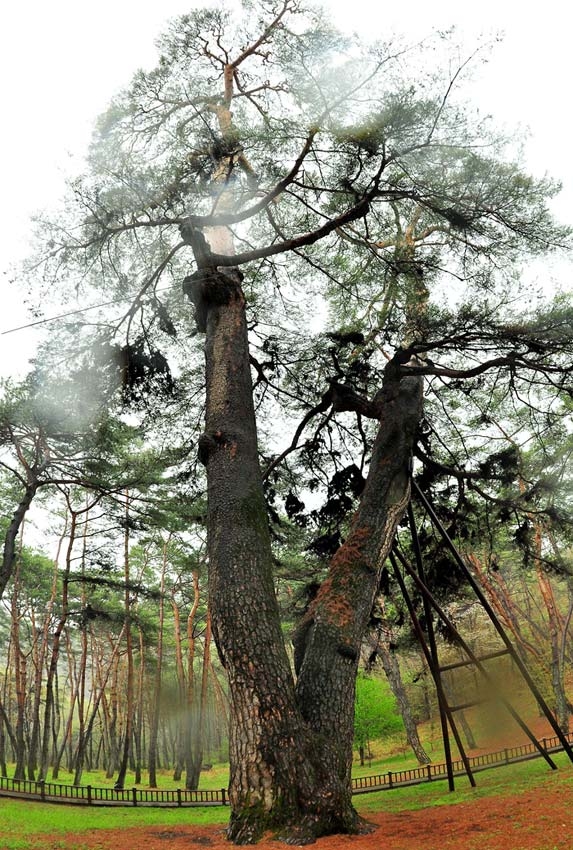
Gwaneumsong Pine Tree, a natural monument designated as Natural Monument No. 349
Photo: K-Heritage Channel (k-heritage.tv)
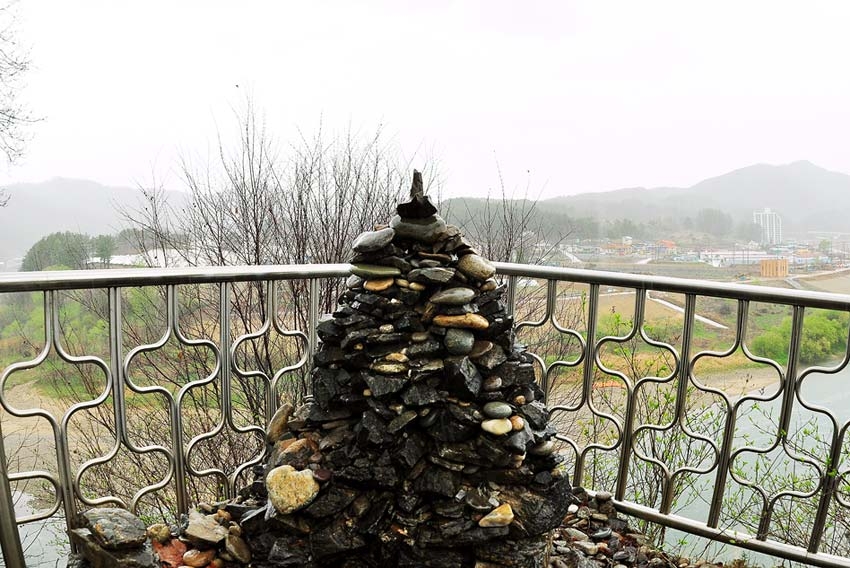
A stone tower built while longing for Queen Jeongsun, who remained in Hanyang
Photo: K-Heritage Channel (k-heritage.tv)
Although Cheongnyeongpo is known for its beautiful scenery, it was a completely isolated place, often described as an island within the land. During the Joseon Dynasty, wild animals often appeared in the area, making travel difficult. Even today, visitors must take a boat to enter the site.

Visitors entering Cheongnyeongpo by boat
Living in such a natural prison, Danjong is said to have called the place Yukjigodo, meaning an isolated island on land. In this way, Cheongnyeongpo is considered a complex cultural heritage site where historical tragedy and natural beauty exist together.
Beyond Tourism, Toward Preservation
After the release of the movie The King’s Warden in early 2026, which attracted more than 16 million viewers, the number of people visiting Cheongnyeongpo has been increasing. Local officials say interest in Cheongnyeongpo has grown along with the film’s popularity. “Cultural heritage only has value when it remains in its original form,” Yeongwol County’s Culture and Tourism Department (CTD) said, as calls for preservation grow alongside the recent increase in visitors to Cheongnyeongpo.
According to the CTD, Cheongnyeongpo received around 160,000 visitors in 2025. However, by May 4, 2026, the number had already exceeded over 230,000 visitors, marking an increase of over 40% in less than a year. The types of visitors have also changed. In the past, most visitors were middle-aged or elderly, but recently there has been a sharp rise in younger tourists, families, and foreign visitors.
As tourism grows, so do debates about how the site should be adapted for visitors. The CTD explained that many visitors have asked for a bridge to be built to Cheongnyeongpo because entering by boat feels inconvenient. In response, the CTD and Marketing Team stated, “The site should first be viewed as a cultural heritage site rather than a simple tourist attraction.” They emphasized that “preserving the original form and meaning of the exile site is the most important priority.” They also added that visitors would experience Cheongnyeongpo not just as a tourist destination, but as a place where they can directly feel the traces and history of Danjong.
Cheongnyeongpo is both a historical site that holds the tragedy of King Danjong and a symbol of isolation created by nature. Today, it has become a popular cultural destination visited by many tourists, yet the sorrow of the Joseon royal family and the tragedy of history still remain deeply embedded in the site. As more people continue to visit the area, this is a chance to ponder more seriously about the value of preservation over development.
There are no registered comments.

I agree to the collection of personal information. [view]